
ARC units communicate constantly, but their language is not auditory; it is visual. Their operational state, threat level, and imminent actions are broadcast through changes in their external lighting arrays, kinetic posture, and movement rhythm. **Machine Intent Analysis (MIA)** is the discipline of decoding this visual language, providing Raiders with critical, predictive intelligence that reduces reaction time and increases counter-measure effectiveness. Against a silent, coordinated foe, reading the visual signals is often the only warning before an attack.
This guide details the primary visual cues exhibited by common ARC units, enabling Raiders to anticipate machine intent and act proactively.
The Core Principle: Lighting as Operational Status
ARC’s primary visual language is emitted via its optic and body lighting arrays. The color and pulse of these lights directly correlate to the unit’s threat assessment level:
- **Soft White/Blue Pulse (Patrol):** Unit is running standard ABA-dictated route. Threat assessment is minimal. Ideal window for covert traversal.
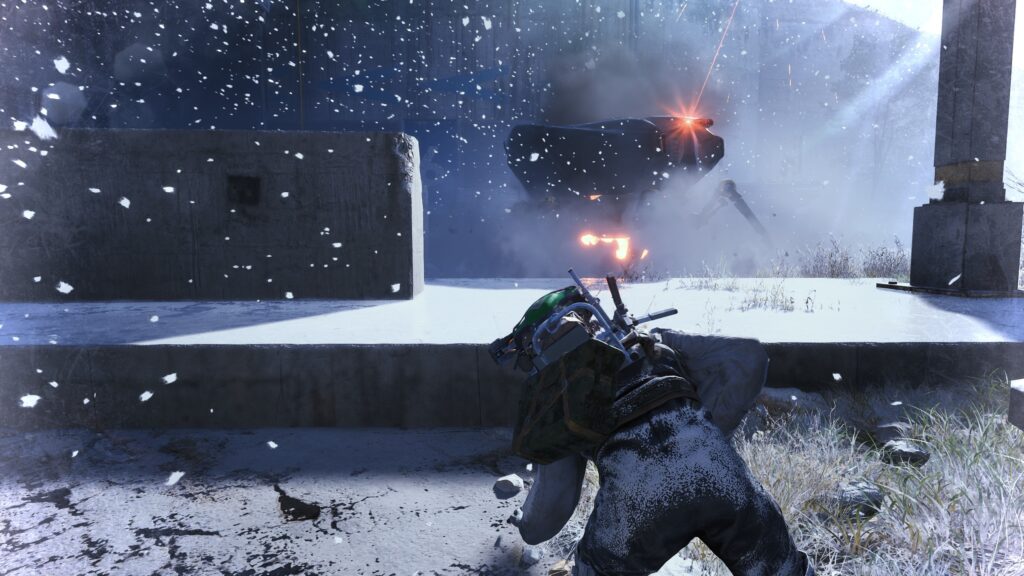
- **Flashing Yellow/Amber (Investigative):** Unit has detected a subtle anomaly (acoustic, thermal, or visual) but has not yet confirmed a Raider presence. Unit will deviate from the patrol route to investigate. Ideal window for deploying decoys (ABM).
- **Solid Red/Flickering Red (Engagement):** Unit has confirmed Raider presence and is actively targeting. Unit will broadcast position to the network. Immediate counter-measures (Shield Wall, Jammer) are mandatory.
Postural Cues: Predicting Kinetic Action
A machine’s posture provides critical, milliseconds-long warning of an imminent kinetic action, often faster than their targeting array can be locked. MIA focuses on rapid detection of these shifts:
| Unit Type | Postural Cue | Predicted Action |
|---|---|---|
| **Warden/Heavy** | Slight tilt forward and locking of hip/knee actuators. | Imminent primary weapon charge (railgun or plasma cannon). Requires immediate cover. |
| **Sniffer Dog** | Lowering of the central chassis, tail segment rises, rapid shuttering of sensors. | Imminent high-speed pursuit or pounce attack. Requires rapid evasive movement (Slide-and-Shoot). |
| **Lancer/Striker** | Rapid extension of shoulder segments; weapon barrel glows white-hot. | Imminent short-range burst of automatic fire. Requires suppression or kinetic counter-fire. |
Acoustic Feedback and Synchronization
While ARC is visually driven, sound often confirms visual data. The distinct pitch of a Warden’s actuator locking into place or the high whine of a Seeker drone powering its weapon provides an acoustic redundancy to the visual cue.
A synchronized detection (e.g., Red light *and* the locking actuator sound) confirms the engagement and requires immediate action.
Exploiting the Visual Feedback Loop
Raiders can manipulate ARC’s visual language. Successfully striking a critical weak point (TCA) often results in a rapid color shift—the red light may flicker or briefly turn dark, signifying a core system failure. This visual feedback confirms the success of the kinetic overmatch strike, saving precious ammunition by signaling that the target is neutralized.
The Challenge of Sensor Dampening
In low visibility (Night Cycle or heavy environmental effects), MIA becomes significantly more difficult, forcing Raiders to rely more heavily on gadget feedback (Recon tagging) and acoustic cues.
Experienced Raiders know that if the visual language is denied, the risk profile jumps dramatically, often necessitating a tactical retreat.
Conclusion: The Silent Warning
MIA is a non-negotiable skill for survival. By dedicating the time to internalize the lighting patterns and kinetic posture of every unit, Raiders gain the milliseconds necessary to deploy a countermeasure or seek cover.
The machine network broadcasts its intentions constantly; the disciplined Raider must simply learn how to listen with their eyes.
Leave a Reply